
stuff that matters
Um O’Reilly nicht unrecht zu tun, neben dem – eigentlich mit Luhmann vergleichbaren, wobei es bei Luhmann doch theorieinhärent war – Shift der Herausfaktorierung jeglicher Kultur aus der Betrachtungsweise, folgt er seit einiger Zeit – mehr oder weniger als einziger im Valley – Umair Haque in Richtung ‘wir lösen zu kleine Probleme, sind zu kurzsichtig auf die immergleichen Themen fixiert, wo bleibt die Addressierung der wirklich wichtigen Themen, Energie, Hunger, rotten financial und political system, usw.’.
Die Finanzkrise versetzt ihn dann schon fast in eine poetische Laune:
Watchful. Listening. Learning. Not rushing about fighting the small things of the moment but letting the storm wash in. It will change us.
That can be good. And as the storm washes through, it will become clear what we have to do.
…
I’ve been quoting that poem in my talks since Why I Love Hackers at ETech in March. It ends with a ringing invocation to work on challenging problems, problems that stretch us, as the wrestlers of the Old Testament were challenged by wrestling with the angel. That seems to me to be the heart of what we need to do now.
…
But I also want to point out that rough times are often the best times for creativity, opportunity and change.
…
And if you look at history, you see that this has always and everywhere been true. It’s not an accident that economist Joseph Schumpeter talked about the “creative destruction” inherent in capitalism. Great problems are also great opportunities for those who know how to solve them. And looking ahead, I can see great opportunities.
…
These are all things we should be doing every day anyway. Sometimes, though, a crisis can provide an unexpected gift, a reminder that nobody promised us tomorrow, so we need to make what we do today count.
Quiz Pt. 35

Was ist das?
—-
Spoiler hier, hat tip to qbits.
Sentiment Analysis (Bloglines Edition)
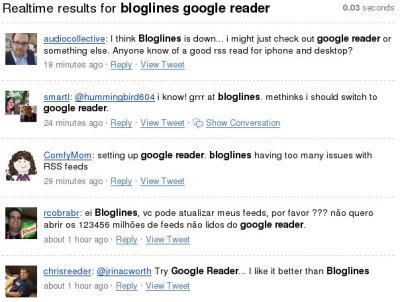
Twittersearch nach bloglines google reader (bloglines updated seit heute morgen die feeds nicht mehr; bleibe trotzdem bloglines treu, solange sie nicht auf die beta zwangsupdaten, was ich aber echt nicht verstehe ist, warum sie – immer schon – im kommunikativen stealth modus bleiben, kein blog, keine news, keine current issues seite, kein nix; einen guten teil der wechsler, und das sind wenn man das hochrechnet sicher ein paar hundert, wenn nicht ein paar tausend pro grösserem aussetzer, könnten sie mit ein paar einfachen worten, ja wir sind uns des problems bewusst, wir arbeiten dran, in 1, 2, 3, 4 stunden geht’s wieder und besser als zuvor, locker abfangen)
Revised
Web 2.0 is ultimately about understanding the rules of business in the network era.
…
Harvest every bit of user contribution, not just the explicit. Your business has thousands of touch points with customers. When they buy from you, they contribute data as well as money. When your suppliers increase their prices, or change their delivery times, they contribute data to you. When you advertise, and people respond (or don’t), they contribute to you. When you introduce a new product, when you do something your customers love, or hate, and people talk about it, they contribute.
…
It’s no longer good enough to gather data and analyze it, then propose and adjust strategies over the next budget cycle. You must infuse your organization with IT, so that, like Walmart, your supply chain responds every time a customer rings up an item at the cash register. This is how Walmart is like Google. No, not the website, but the live enterprise, which learns and responds.
…
Web 2.0 thrives on network effects (also known as virtuous circles): data begetting more data, services getting better in such a way that they are used more often, until you are so far ahead of the next guy that he can’t catch up.
Tim O’Reilly’s revised definition vom Web 2.0 (weg vom technokratischen (compact 1, 2005), weg vom neoglobalistischen (compact 2, 2006), hin zum datahamsterhegemonialen) ((natürlich hat er recht, aber die begriffsbestimmung wird tatsächlich immer dünner, je weiter sie sich von der kulturellen informiertheit – nicht dem mitmachdings oder dem überbau der demokratischen gutheit usw. – entfernt. as is ist es im grunde wirklich nur mehr auf die walmart’schen cash registers und die anschlussprozesse zusammengekocht, und das kann es ja auch nicht sein))
Date Ranger
note to self aber auch insgesamt sehr cool:
mit since:yyyy-mm-dd until:yyyy-mm-dd lässt sich bei der Twittersuche (TSFKAS) das Datum dementsprechend einschränken. Die Erwähnungen etwa aller monkeys im September herauszufischen wird damit ein snap.
(via von Alan Gutierrez)
CPS

Mr. Lee’s CatTrack (Projekte für Katz und Tier) im Einsatz bei In the arms of strangers (via)
Don't Drink and Mail
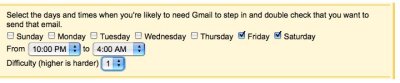
hihi, Gmail hat den Labs ein neues Feature namens Mail Goggles spendiert, welches den Sender, wenn aktiviert, zu definierbaren Zeiten mit Rechenaufgaben konfrontiert, die gelöst werden wollen, bevor die Email tatsächlich verschickt wird.
ZuckerVZ
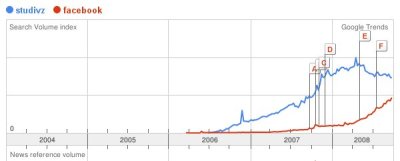
Google Trends für StudiVZ vs. Facebook für Deutschland
(abt. zuckerberg usw.)
YUI 2.6
Yahoo hat Versin 2.6 der YUI released.
Nett und neu u.a. der Paginator (det, ex) mit dem man auch statischen Content verseiten kann, oder das Karussell, das bis dato nur separat erhältlich war.
RWW on RDF
RWW weiter auf semantischer Sinnsuche (wo sind nur all die Apps etc.)
meddlet
langreiter leseliste economy edition.
The live web
Doc Searls über The Live Web
The Web isn’t just real estate. It’s a habitat, an environment, an ever-increasingly-connected place where fecundity rules, vivifying business, culture and everything else that thrives there. It is alive.
usw.
(via)
10g

Boardrooms
Umair Haque’s five-step construction kit für next-generation businesses.
(1) the central challenge 21st century boardrooms must face is not reinventing strategies, or business models, but reinventing businesses as institutions.
(2) understand how the global economy, beyond all the chatter about bailouts, bankruptcies, and bubbles, is really changing.
(3) understanding that next-generation businesses are built on new DNA, or new ways to organize and manage economic activities.
(4) We need no less than better corporate governance, a working shareholder democracy, a recognition of what capital really is (and isn’t), radically more enduring incentives – aligned with outcomes that actually matter to people
(5) we have to put the meaning back into business.
500k
Ning hat 500.000 social networks, alle 30 Sek. kommt ein neues dazu …
(siehe auch das grossartige hackr.work)
Over Capacity
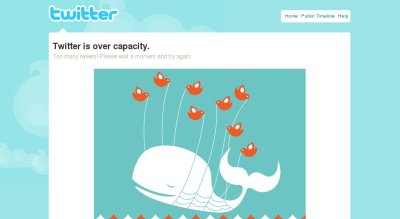
hach, schon lang nicht mehr gesehen, ich hatte schon Angst, ich hätte das letzte Mal verpasst.
Free Typologie
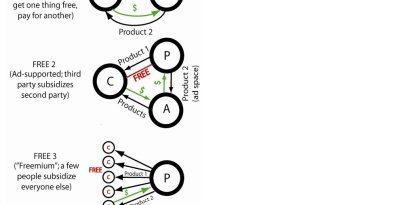
Chris Anderson kommt bzgl. seines long tail Nachfolgers free so langsam in den Endspurt und macht tolle Diagramme.
Al Bundle
Focus and unbundling do not equal shrinking or fragmentation. At least two of the three business types outlined above – infrastructure management businesses and customer relationship businesses – are driven by powerful economies of scale and scope. These economics will lead to increasing concentration and consolidation on a global scale. As an example, look at the process of consolidation that has been playing out for years in the global contract manufacturing industry or global logistics markets.
In fact, unbundling will increasingly become a pre-requisite for creating scalable growth platforms. Focused growth will be much more profitable and sustainable. This is the paradox: companies may need to shed in order to grow more rapidly and more robustly.
John Hagel über Bundles, Unbundling, Dell und die Frage: was macht man eigentlich?
Google Herbst

google.de heute im Herbst-Look.
List of films with monkeys in them
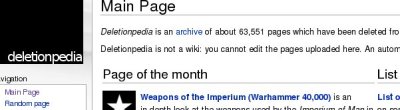
Die Wikipedia ist ja ein sehr wunderbares, aber auch sehr bürokratisches Gewächs und der delete-Finger ist bei einigen Administratoren gut entwickelt. Die Deletionpedia sammelt zum Glück die unterdrückten Schätze, etwa eine Liste von Filmen mit Affen drin.
(via)